BC First Nations Tripartite Post-Secondary Education Model

Under the direction of First Nations, this model will fundamentally transform the post-secondary education system in BC.

Since 2018, FNESC and IAHLA have been working under the direction of BC First Nations on the development and implementation of the BC Tripartite Post-Secondary Model (BC PSE Model). Through engagement with First Nations and First Nations-mandated post-secondary institutes, efforts are being made to ensure that the BC PSE Model addresses the needs and priorities identified by First Nations.

Work on the BC PSE Model has been formally endorsed by First Nations leadership through resolutions passed by the First Nations Summit, BC Assembly of First Nations, and the Union of BC Indian Chiefs.

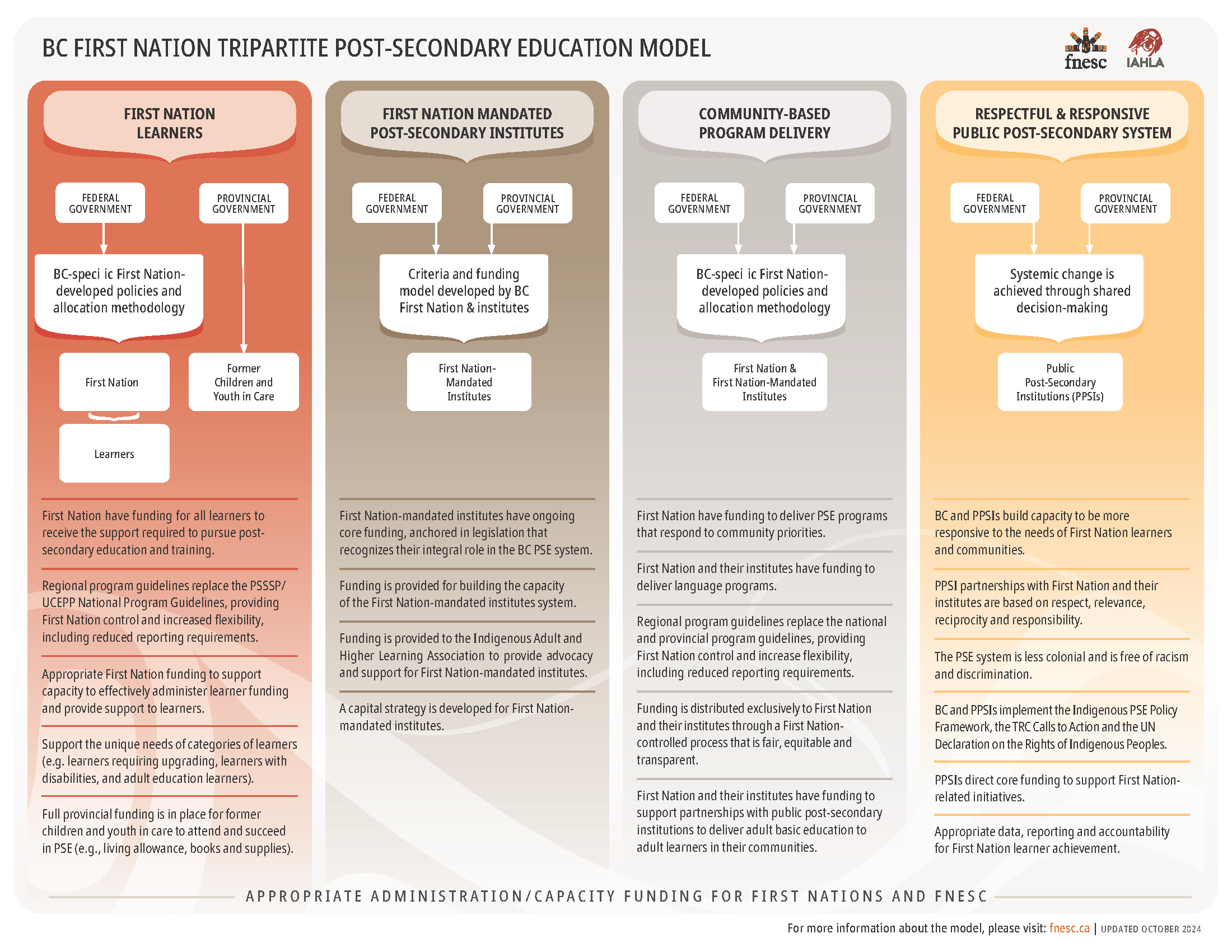
Four pillars have been identified under the BC First Nations Tripartite PSE Model.

First Nations have funding for all learners to receive the support required to pursue post-secondary education and training. Regional program guidelines replace the PSSSP/ UCEPP National Program Guidelines, providing First Nation control and increased flexibility, including reduced reporting requirements. Full provincial funding is in place for former children and youth in care to attend and succeed in PSE (e.g., living allowance, books and supplies).

First Nations-mandated post secondary institutes have ongoing core and capacity development funding, anchored in legislation, recognizing their integral role in the BC PSE system.

First Nations have funding to deliver post-secondary education programs that respond to community priorities, including language programs and Adult Basic Education. Regional program guidelines replace the national and provincial program guidelines, providing First Nation control and increase flexibility, including reduced reporting requirements. Funding is distributed exclusively to First Nations and their institutes through a First Nation-controlled process that is fair, equitable and transparent.

Systemic change within public post-secondary institutions (PPSIs) based upon shared decision-making with First Nations on whose territory PPSIs operate to ensure that PPSIs are responsive to the needs of First Nations learners.